Macroalgae as Supplement
- Summary
- Fact Sheet
- Project Details
Project MAR is a prototype developed within the Master in Biotechnology of Marine Resources at the Polytechnic University of Leiria. It proposes the use of Codium tomentosum, a green seaweed, as the basis for a sustainable, calcium-rich food supplement aimed at tackling severe malnutrition and emaciation—particularly among children under five, pregnant women, and the elderly in food-insecure regions.
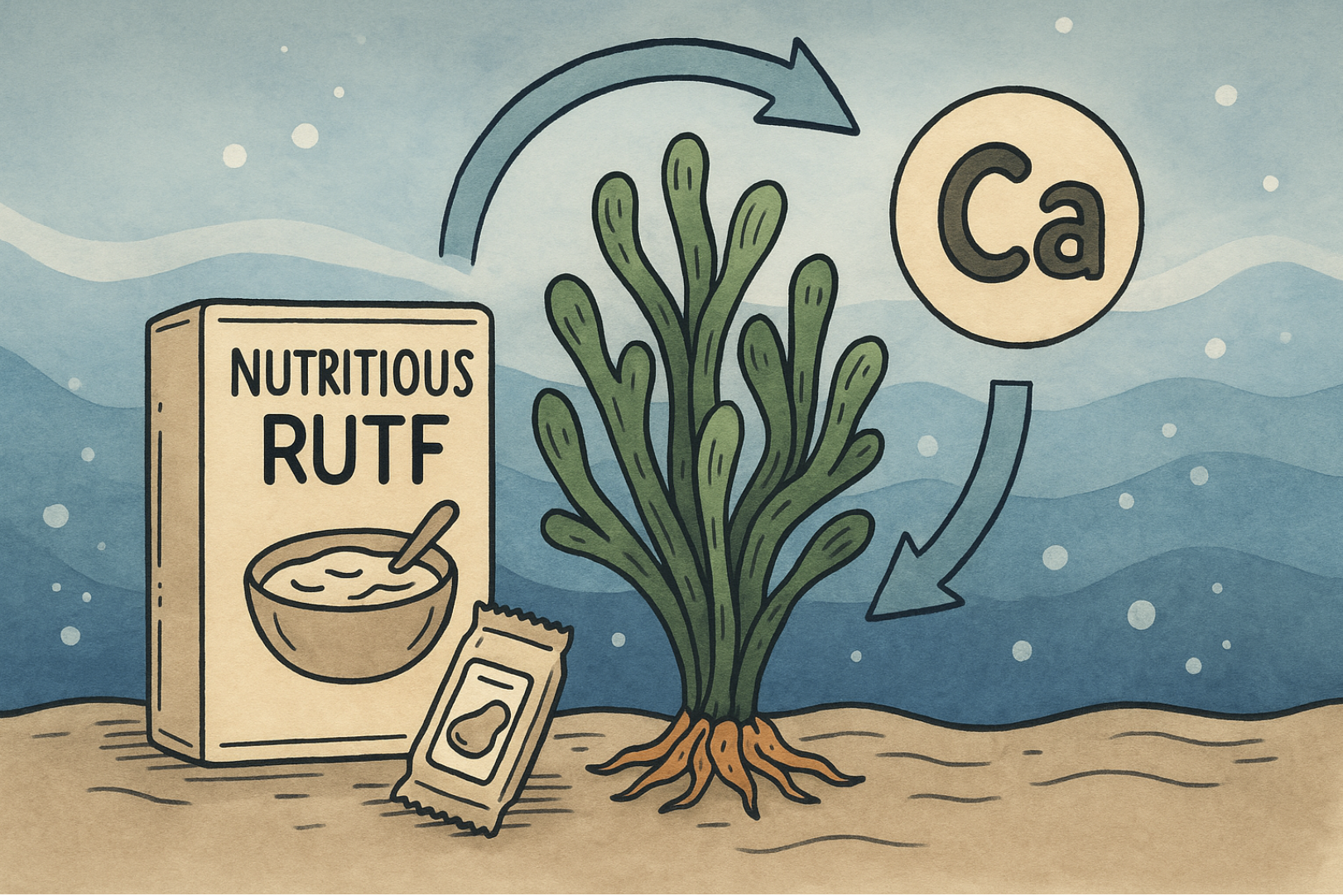
The supplement would take the form of a Ready-to-Use Therapeutic Food (RUTF), replacing conventional ingredients like peanuts with nutrient-dense seaweed. Cultivated through aquaculture, Codium tomentosum offers a sustainable and scalable solution that does not compete with land-based agriculture.
The project aligns with SDGs 2 (Zero Hunger), 3 (Good Health and Well-being), 12 (Responsible Consumption and Production), 14 (Life Below Water), and 17 (Partnerships for the Goals), offering a high-impact, transferable model for improving global nutrition and marine resource use.
Challenge
Project MAR addresses the critical issue of malnutrition, specifically emaciation, which affects approximately one in three children under the age of five worldwide. Malnutrition leads to stunted growth, impaired brain development, learning difficulties, increased susceptibility to diseases, and even death. The project aims to provide a sustainable and nutritious food supplement to combat these severe health issues.
Target Groups:
The primary beneficiaries of this project are malnourished children under the age of five, particularly in regions with high rates of food insecurity. Additionally, the project targets vulnerable populations, including pregnant women and the elderly, who are at risk of nutritional deficiencies. The broader community benefits from the project through improved public health outcomes and enhanced food security.
Solution
The solution proposed by Project MAR involves the development of a food supplement using the green seaweed Codium tomentosum. This marine resource is low-cost, abundant, nutritious, and rich in value-added compounds. The seaweed is cultivated in aquaculture, ensuring a sustainable supply. The project focuses on producing Ready-to-Use Therapeutic Food (RUTF) rich in calcium, which is essential for bone health and overall well-being. The use of Codium tomentosum in RUTFs addresses the calcium deficiency often found in diets, providing a balanced and healthy nutritional option.
Innovation
The unique selling point of Project MAR is the use of Codium tomentosum, a green seaweed that does not compete with traditional crops for land or freshwater resources. This seaweed is highly nutritious, offering a sustainable alternative to conventional food supplements. By replacing peanuts with seaweed in RUTFs, the project aims to increase the calcium content and control rising prices, making the supplement more affordable and accessible.
Impact
The impact of Project MAR is significant in several areas:
- Health: By providing a nutritious and calcium-rich food supplement, the project aims to reduce malnutrition and its associated health risks, improving the overall well-being of vulnerable populations.
- Economic: The project supports the development of the seaweed aquaculture industry, creating job opportunities and contributing to economic growth.
- Environmental: The use of sustainable aquaculture practices reduces the environmental footprint of food production and promotes the responsible use of marine resources.
- Social: The project aligns with several Sustainable Development Goals (SDGs), including SDG 2 (Zero Hunger), SDG 3 (Good Health and Well-being), SDG 12 (Responsible Consumption and Production), SDG 14 (Life Below Water), and SDG 17 (Partnerships for the Goals).
Feasibility and Transferability
The feasibility of Project MAR is supported by the growing demand for sustainable and nutritious food sources. The European Union’s interest in seaweed as a biomass resource and the existing aquaculture infrastructure provide a strong foundation for the project’s success. However, the project must address regulatory challenges related to food supplements and manage production costs effectively.
The transferability of this project is high, as the technology and processes can be adapted to different regions with access to similar seaweed species. By collaborating with international organizations such as UNICEF and leveraging partnerships with research institutions, funding organizations, and industrial partners, the project can be scaled and replicated globally.
This student project is submitted through:
School of Tourism and Maritime Technology, Polytechnic University of Leiria
It involved 2 students of the Master in Biotechnology of Marine Resources
Project presentation video: Watch Here