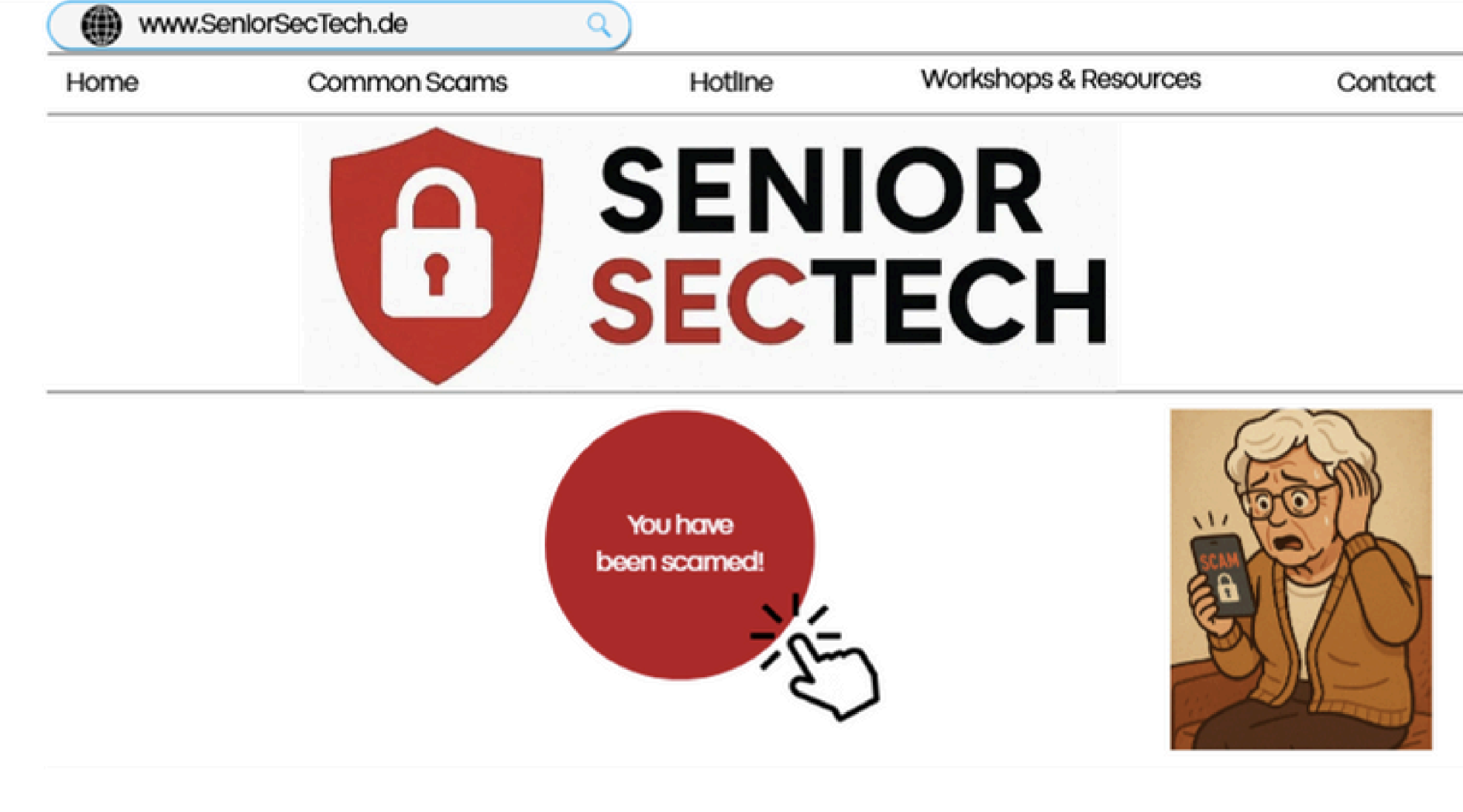
SENIOR SECTECH
- Summary
- Fact Sheet
- Project Details
SENIOR SECTECH is a European initiative aiming to reduce scams targeting elderly citizens by 2030. The project seeks to empower older people—who often face digital exclusion—by offering sustainable education and practical tools to navigate the digital world safely. Through workshops, awareness campaigns, and targeted support (including games, helplines, and a website), the project aspires to improve seniors’ participation in society and protect them from fraud.
Challenge
Elderly individuals across Europe are increasingly vulnerable to scams due to:
- Cognitive decline affecting decision-making and increasing gullibility.
- Low digital literacy and limited technology use.
- Social isolation, which makes them more susceptible to manipulation.
- Rapid digitalisation and overwhelming online environments that outpace their learning curve.
Target Groups:
- Primary: Older adults, particularly those who are socially isolated, technologically inexperienced, or living in rural areas.
- Secondary: Families, caregivers, and local communities providing support to seniors.
Solution
SENIOR SECTECH proposes a multi-layered approach:
- Public awareness tools, such as educational games and dedicated phone support.
- A central website offering practical advice and information.
- Regular in-person and digital workshops tailored to different digital skill levels.
- Community-based outreach to ensure access and inclusion regardless of background or location.
Innovation
- Focus on education as prevention, not just post-fraud support.
- Uses a holistic persona-driven approach, based on Ana Maria—a senior citizen facing fears of disconnection and scams.
- Adopts a person-centred strategy, acknowledging the diversity among older adults and customising learning accordingly.
- Promotes safe participation in digital society as a core component of social inclusion.
Impact
- Increased digital confidence and resilience among seniors.
- Improved awareness and ability to detect online scams.
- Strengthened social connectedness and reduced fear of isolation.
- A reduction in scam victimisation rates across elderly populations in Europe.
- Long-term potential to integrate into public digital literacy policies or community programmes.
This student project is developed during the DBCR International Course and DISC Final Conference.
Project Presentation: Download Here